I don't dislike "hipsters," I'm just curious. Why do I look like one but not feel like one? No good answer...but...a few signs that you might not be a hipster:
1. You get up early on Sundays.
2. Born-and-bred Williamsburgers tell you about the one and only remaining bar in which they feel comfortable.
3. You know the priest at a local church.
4. No skinny jeans.
5. Your vintage scarves were your grandmother's.
6. You moved to the city with a single suitcase.
7. You smile at people.
8. Wearing short shorts and track shoes means you're going running.
9. Earnestness!
10. You have health and dental and are grateful.
11. You've never been to a Pool Party.
12. Avoiding Bedford is the key to happiness.
13. You are uncomfortable surrounded by hipsters.
14. You sometimes feel guilty for living in Williamsburg.
15. You're not in a band.
16. When in Hana after midnight, you're usually buying carrots or catfood.
17. Your Leroy's Minnows t-shirt is from a bait-shop you used to go to in northern Minnesota.
18. You hate PBR.
There's something about #9 that is essential, and which separates non-hipsters from hipsters, those "members" of a "movement" that "journalist Christian Lorentzen says 'fetishizes the authentic' elements of all of the 'fringe movements of the post-war era - Beat, hippie, punk,...grunge, and white trash chic' and draws on the 'cultural stores of every unmelted ethnicity' and 'gay style,' and then 'regurgitates it with a winking inauthenticity' and a sense of irony." Lorentzen, who prefaces many of his articles with thoughts on hipsterdom goes on to say that hipsters, comprising a group of mostly white 18-34-year-olds, "have defanged, skinned, and consumed" all influences "into a repretoire of meaninglessness."
But do all generations do this, in different ways? And, underneath the omnipresent surface, mustn't there be some tremendous socioculturalpoliticoeconomic, heartwrenching reason for the seeming absence of heart?
Wednesday, July 9, 2008


Friday, July 4, 2008
Thursday, July 3, 2008
Poem Interlude
I'm crossing Under the BQE tomorrow to head back to Illinois for a few days to visit the fam. A year ago today, my grandmother died, and I was about to fly home for the funeral, where I felt like a part of me was going to be buried too. I'm swimming back into my journal from those days, and I found this entry, which gives me hope now, at a time when hope and mourning and love are all tangled up again:
7/6/2007: There was something very practical about Grandma. I can hear her saying that death must happen and asking me questions about my life to distract me from tears."
The next day I wrote about my grandfather, my favorite person in the universe:
Sometimes my heart feels bigger than my whole body.
And here's a poem I wrote on 7/7/2007, the day I flew back to New York, and the date, this year, when I will fly back to New York again.
Untitled (July 7, 2007)
We make such a slight shadow, flying
over Illinois fields, roads, farms like Swiss dots, lives stretching
beyond sight into haze. Over cemeteries,
too, our wings make such a slight shadow, faint
as a white monogram on a white
handkerchief. Clouds cast bigger shadows, and,
slipping amongst them, we lose ours completely,
such as it was, barely a finger
of shadow brushing the face of the earth.
7/6/2007: There was something very practical about Grandma. I can hear her saying that death must happen and asking me questions about my life to distract me from tears."
The next day I wrote about my grandfather, my favorite person in the universe:
Sometimes my heart feels bigger than my whole body.
And here's a poem I wrote on 7/7/2007, the day I flew back to New York, and the date, this year, when I will fly back to New York again.
Untitled (July 7, 2007)
We make such a slight shadow, flying
over Illinois fields, roads, farms like Swiss dots, lives stretching
beyond sight into haze. Over cemeteries,
too, our wings make such a slight shadow, faint
as a white monogram on a white
handkerchief. Clouds cast bigger shadows, and,
slipping amongst them, we lose ours completely,
such as it was, barely a finger
of shadow brushing the face of the earth.
Saturday, June 28, 2008
I Am Hussein
So great.
The movement reminds me not just of Spartacus but also this David Massengill folk piece (and nothing says summer like these little outdoor festivals that bloom all over the country, crummy videographers and all):
The movement reminds me not just of Spartacus but also this David Massengill folk piece (and nothing says summer like these little outdoor festivals that bloom all over the country, crummy videographers and all):
Learning to be Ailanthus
The tree in the photograph from 6/18 has been cut down. Developers have sunk pylons, ailanthus is already starting to sprout - most persaverant of all - and the packed earth fills when it rains.
And now, two poets, Malena Morling (whom I've mentioned before) and Allen Ginsburg - both of whom knew Utopia Avenue, decades apart - and their poems, one containing ailanthus, each requiring a gun.
For F.M. Who Did Not Get Killed Yesterday on 57th Street
by Malena Morling
When they shot you,
you did not become a stone or a tree,
you did not become lake water
or the unwieldy shadow of a cloud.
You darted like a fish
through the hole the bullet made in the air.
You became air,
refusing to thicken, refusing to talk back
or move unless the wind moved
as it does now through the elms
and the ailanthus. Today I can hear
the ocean at the end of the block
tossing itself up on the beach,
the sound of it has entered everything in the house,
even the thimbles in the drawers.
Dream Record : June 8, 1955
by Allen Ginsburg
A drunken night in my house with a
boy, San Francisco: I lay asleep:
darkness:
I went back to Mexico City
and saw Joan Burroughs leaning
forward in a garden-chair, arms
on her knees. She studied me with
clear eyes and downcast smile, her
face restored to a fine beauty
tequila and salt had made strange
before the bullet in her brow.
We talked of the life since then.
Well, what's Burroughs doing now?
Bill on earth, he's in North Africa.
Oh, and Kerouak? Jack still jumps
with the same beat genius as before,
notebooks filled with Buddha.
I hope he makes it, she laughed.
Is Huncke still in the can? No,
last time I saw him on Times Square.
And how is Kenney? Married, drunk,
and golden in the East. You? New
loves in the West -
Then I knew
she was a dream : and questioned her
-Joan, what kind of knowledge have
the dead? can you still love
your mortal acquaintances?
What do you remember of us?
She
faded in front of me - The next instant
I saw her rain-stained tombstone
rear an illegible epitaph
under the gnarled branch of a small
tree in the wild grass
of an unvisited garden in Mexico.
And now, two poets, Malena Morling (whom I've mentioned before) and Allen Ginsburg - both of whom knew Utopia Avenue, decades apart - and their poems, one containing ailanthus, each requiring a gun.
For F.M. Who Did Not Get Killed Yesterday on 57th Street
by Malena Morling
When they shot you,
you did not become a stone or a tree,
you did not become lake water
or the unwieldy shadow of a cloud.
You darted like a fish
through the hole the bullet made in the air.
You became air,
refusing to thicken, refusing to talk back
or move unless the wind moved
as it does now through the elms
and the ailanthus. Today I can hear
the ocean at the end of the block
tossing itself up on the beach,
the sound of it has entered everything in the house,
even the thimbles in the drawers.
Dream Record : June 8, 1955
by Allen Ginsburg
A drunken night in my house with a
boy, San Francisco: I lay asleep:
darkness:
I went back to Mexico City
and saw Joan Burroughs leaning
forward in a garden-chair, arms
on her knees. She studied me with
clear eyes and downcast smile, her
face restored to a fine beauty
tequila and salt had made strange
before the bullet in her brow.
We talked of the life since then.
Well, what's Burroughs doing now?
Bill on earth, he's in North Africa.
Oh, and Kerouak? Jack still jumps
with the same beat genius as before,
notebooks filled with Buddha.
I hope he makes it, she laughed.
Is Huncke still in the can? No,
last time I saw him on Times Square.
And how is Kenney? Married, drunk,
and golden in the East. You? New
loves in the West -
Then I knew
she was a dream : and questioned her
-Joan, what kind of knowledge have
the dead? can you still love
your mortal acquaintances?
What do you remember of us?
She
faded in front of me - The next instant
I saw her rain-stained tombstone
rear an illegible epitaph
under the gnarled branch of a small
tree in the wild grass
of an unvisited garden in Mexico.
Monday, June 23, 2008
Williamsburg is (not) Dead
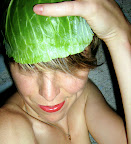
Check out the top Brooklyn listing on Keith Wagstaff's blog, Williamsburg is Dead. Hurrah for reverse alphabetization and friendly promotion. Keith also manages the site Fashion Geek (soon to be housed on the blog Bottomless Dish); he's the Citysearch Shopping Editor. As thanks, here's a photo of my latest fashion creation, the one-wear, homegrown cabbage leaf cloche, in green:
Over the BQE: Corn Ethanol is Driving on Fumes
With all those cars whizzing constantly by, one's mind occasionally turns to what's making them go. If only it were as simply joyful as Dr. Seuss implied.
The current Times headline article underscores the complexity, reporting on Obama's support of subsidies for farmers producing corn for ethanol. I disagree with Obama's embrace of corn ethanol and in fact find more sanity, on one level, in the laissez-faire position of folks (like, like it or not, McCain) who support eliminating the tariff on sugarcane ethanol, which is much more efficient than its corn counterpart (an 8:1 versus 2:1 energy ratio, meaning that corn ethanol just barely produces enough energy to make it even remotely viable).
In a nutshell (cornhusk?), corn ethanol owes its existence to massive inputs of, yes, petroleum-based energy, in the form of farm and processing equipment and fuel. It requires enormous amounts of land, at a time when the world faces an impending food crisis. Because it relies so heavily on petroleum, not to mention inputs of fertilizer, water, and other limited resources, it is not an environmentally sustainable solution. It has worldwide, lesser-known environmental impacts, too, like contributing to Amazon deforestation because increased U.S. corn production means soybeans must be grown elsewhere, and elsewhere is often Brazil. It's unreliable: as Midwestern floods have underlined, shifting weather patterns leave us on shaky (sodden) ground if we're relying on single regions for traditional sources of food, and now energy (millions of acres and billions of dollars in crops were lost in the waters). And it produces far less energy than other alternative sources, such as the just-mentioned sugarcane ethanol, wind power, solar power, geothermal power, hydropower, and ethanol produced from wood and other scraps.
As for corn ethanol subsidies, consider this, from economist Steve Stoft's zFacts:
"Corn ethanol subsidies totaled $7 billion in 2006 for 4.9 billion gallons of ethanol. That's $1.45 per gallon of ethanol (and $2.21 per gal of gas replaced). Even with high gas prices in 2006, producing a gallon of ethanol cost 38¢ more than making gasoline with the same energy, so ethanol did need part of that subsidy. But what about the other $1.12? Not needed! So all of that became a $5.4 billion windfall paid to real farmers, corporate farmers, and ethanol makers like multinational ADM. That's quite a bit [of money, especially] when you figure it only made us 1.1% more energy-independent and only reduced U.S. greenhouse gases by 1/19 of 1%."
Cleantech Blog offers a simple breakdown of elements of the corn ethanol controversy. I come from a long line of farmers, and I support small farmers everywhere, but there has got to be a better way to support their work (it's the big commercial farms getting the lion's share of the ethanol subsidies anyway), feed people, and sustain the planet.
The current Times headline article underscores the complexity, reporting on Obama's support of subsidies for farmers producing corn for ethanol. I disagree with Obama's embrace of corn ethanol and in fact find more sanity, on one level, in the laissez-faire position of folks (like, like it or not, McCain) who support eliminating the tariff on sugarcane ethanol, which is much more efficient than its corn counterpart (an 8:1 versus 2:1 energy ratio, meaning that corn ethanol just barely produces enough energy to make it even remotely viable).
In a nutshell (cornhusk?), corn ethanol owes its existence to massive inputs of, yes, petroleum-based energy, in the form of farm and processing equipment and fuel. It requires enormous amounts of land, at a time when the world faces an impending food crisis. Because it relies so heavily on petroleum, not to mention inputs of fertilizer, water, and other limited resources, it is not an environmentally sustainable solution. It has worldwide, lesser-known environmental impacts, too, like contributing to Amazon deforestation because increased U.S. corn production means soybeans must be grown elsewhere, and elsewhere is often Brazil. It's unreliable: as Midwestern floods have underlined, shifting weather patterns leave us on shaky (sodden) ground if we're relying on single regions for traditional sources of food, and now energy (millions of acres and billions of dollars in crops were lost in the waters). And it produces far less energy than other alternative sources, such as the just-mentioned sugarcane ethanol, wind power, solar power, geothermal power, hydropower, and ethanol produced from wood and other scraps.
As for corn ethanol subsidies, consider this, from economist Steve Stoft's zFacts:
"Corn ethanol subsidies totaled $7 billion in 2006 for 4.9 billion gallons of ethanol. That's $1.45 per gallon of ethanol (and $2.21 per gal of gas replaced). Even with high gas prices in 2006, producing a gallon of ethanol cost 38¢ more than making gasoline with the same energy, so ethanol did need part of that subsidy. But what about the other $1.12? Not needed! So all of that became a $5.4 billion windfall paid to real farmers, corporate farmers, and ethanol makers like multinational ADM. That's quite a bit [of money, especially] when you figure it only made us 1.1% more energy-independent and only reduced U.S. greenhouse gases by 1/19 of 1%."
Cleantech Blog offers a simple breakdown of elements of the corn ethanol controversy. I come from a long line of farmers, and I support small farmers everywhere, but there has got to be a better way to support their work (it's the big commercial farms getting the lion's share of the ethanol subsidies anyway), feed people, and sustain the planet.
Saturday, June 21, 2008
Green Saturday Night
I've been thinking about environmental sustainability more and more lately and how ordinary people can become - and remain - involved in work to help each other and the planet. Part of my personal commitment involves the following "pacts" with myself, a list bound to grow:
*To buy used products and clothing whenever possible and to give away things I no longer want. (e.g.,I found silver Ann Taylor shoes that cost $3.99 at a Salvation Army today!)
*To freeze all fruit/vegetable scraps, eggshells, and the like and take the bag of scraps to the local composting project, at Green Dome Garden (drop off your bags in the wagon by the dog-run on Saturdays until 2 p.m.).
*To participate in Community-Supported Agriculture (CSA), by being a shareholder in the Hearty Roots Farm.
*To talk to people about what's going on in the world and little things that anyone can do to make a difference.
*To be more conscious of my water use and not leave the sink and shower running longer than necessary.
*To make at least one annual contribution to offset my carbon footprint.
*To remember to carry tote bags when I go places, to reduce my use of plastic bags.
*To buy local and/or organic food as much as possible.
*To recycle metal, glass, and paper as much as possible (related sidenote: New York 1 just ran a story that explains how the NYC Transit Authority sorts and recycles trash in subway platform cans).
*To walk and hitch rides on subways and busses as much as possible (except when poetry demands I take to the road).
*To keep on veggin'.
*To use energy-efficient lighting as much as possible (I still need to come up with a twinkle light solution...).
*To give gifts and request gifts from organizations like Kiva and Heifer International. Through the first, your dollars are channeled as microloans to individuals in need of help starting or sustaining a business. Through the second, your dollars, ostensbily paying for an animal or resource needed by a community, are put into a general fund and used to empower communities to fight hunger, protect the environment, and generally improve local quality of life.
*To continue supporting the work of the National Resources Defense Council.
*To pay attention to candidates' stances on environmental issues.
*To pay attention to what I'm consuming by being alive (damn paper cups of coffee!) and what I'm giving back - and to work hard to increase the latter.
*To buy used products and clothing whenever possible and to give away things I no longer want. (e.g.,I found silver Ann Taylor shoes that cost $3.99 at a Salvation Army today!)
*To freeze all fruit/vegetable scraps, eggshells, and the like and take the bag of scraps to the local composting project, at Green Dome Garden (drop off your bags in the wagon by the dog-run on Saturdays until 2 p.m.).
*To participate in Community-Supported Agriculture (CSA), by being a shareholder in the Hearty Roots Farm.
*To talk to people about what's going on in the world and little things that anyone can do to make a difference.
*To be more conscious of my water use and not leave the sink and shower running longer than necessary.
*To make at least one annual contribution to offset my carbon footprint.
*To remember to carry tote bags when I go places, to reduce my use of plastic bags.
*To buy local and/or organic food as much as possible.
*To recycle metal, glass, and paper as much as possible (related sidenote: New York 1 just ran a story that explains how the NYC Transit Authority sorts and recycles trash in subway platform cans).
*To walk and hitch rides on subways and busses as much as possible (except when poetry demands I take to the road).
*To keep on veggin'.
*To use energy-efficient lighting as much as possible (I still need to come up with a twinkle light solution...).
*To give gifts and request gifts from organizations like Kiva and Heifer International. Through the first, your dollars are channeled as microloans to individuals in need of help starting or sustaining a business. Through the second, your dollars, ostensbily paying for an animal or resource needed by a community, are put into a general fund and used to empower communities to fight hunger, protect the environment, and generally improve local quality of life.
*To continue supporting the work of the National Resources Defense Council.
*To pay attention to candidates' stances on environmental issues.
*To pay attention to what I'm consuming by being alive (damn paper cups of coffee!) and what I'm giving back - and to work hard to increase the latter.
Friday, June 20, 2008
Cats and (Balloon) Dogs
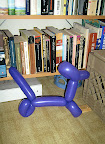
Tonight we trooped to see the lovely Sara Taksler's (and Naomi Greenfield's) documentary about people whose lives have been changed by, yes, twisting balloons. And we learned how to make balloon dogs. Sarah talks about the film - Twisted: A Balloonamentary - in this Huffington Post article. Basically, the movie's about about weird people who don't quite fit in finding a way to relate to the world and each other. Balloons, dammit. Happiness! Which the world, as evidenced by the documentary film industry, sometimes has a hard time swallowing: "While it would seem obvious that, at some point, counter-programming would be desired to offset the over-saturated downer-documentary market, distributors can't get enough sad stuff, which, at one point, left us wondering if our film would ever see the light of day."
My cat Tank doesn't care one way or the other about balloons and more existential matters. But the dog must die.
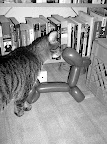
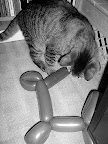
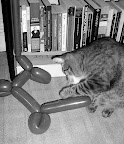
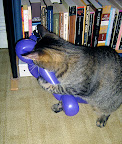
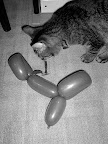
My cat Tank doesn't care one way or the other about balloons and more existential matters. But the dog must die.
Wednesday, June 18, 2008
Because I can't RSS feed, podcast, record, e-mail, blogroll, text, post, download, photograph, chat, hyperlink, attach, map, bookmark, or embed a scent - the scent on the air tonight - I'm forced to use words to say, blessedly, there are still so many things that one just has to be there for. Running, the just-washed air vibrated with grass and flowers, and a big golden moon, like a cat's-eye marble, shone down on the BQE.
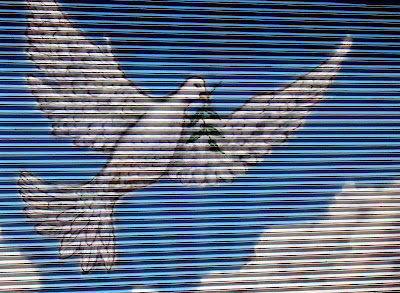
I ran by the dove on Berry and 13th:
And I felt like a warrior, listening to Irish battle songs in air that smelled like Ranelagh (Williamsburg/Greenpoint is magical for embodying so many of the places I love in this world: see Ranelagh photo below, on the Grand Canal, freely associated with Patrick Kavanagh, who loved it) - while everything felt like peace.

"O commemorate me where there is water,
Canal water, preferably, so stilly
Greeny at the heart of summer." - Patrick Kavanagh
I ran by the dove on Berry and 13th:
And I felt like a warrior, listening to Irish battle songs in air that smelled like Ranelagh (Williamsburg/Greenpoint is magical for embodying so many of the places I love in this world: see Ranelagh photo below, on the Grand Canal, freely associated with Patrick Kavanagh, who loved it) - while everything felt like peace.

"O commemorate me where there is water,
Canal water, preferably, so stilly
Greeny at the heart of summer." - Patrick Kavanagh
Spotlight on Here
Daniel and I (and especially before he discovered Kensington!) have been exploring restaurants in the hood. A couple of good recent finds include
Dokebi - a tasty Korean joint, particularly cozy on a rainy night. Grand between Bedford and Driggs.
Bozu - a peculiarly wonderful little Japanese spot serving eclectic sushi, including the best vegetarian options I've seen, and a pungent wasabi martini (sooo good). Grand between Havemeyer and Roebling.
Perhaps I will start an Under the BQE restaurant blogroll...and a roll of Brooklyn-friendly blogs. Yes. Soon.
Dokebi - a tasty Korean joint, particularly cozy on a rainy night. Grand between Bedford and Driggs.
Bozu - a peculiarly wonderful little Japanese spot serving eclectic sushi, including the best vegetarian options I've seen, and a pungent wasabi martini (sooo good). Grand between Havemeyer and Roebling.
Perhaps I will start an Under the BQE restaurant blogroll...and a roll of Brooklyn-friendly blogs. Yes. Soon.
Organisms
I'm wagering you don't, but remember the pilot episode of Star Trek: The Next Generation (Encounter at Farpoint)? (Incidentally I remember its airing on September 28, 1987, me an eight-year-old thrilled even then by the swelling of the orchestra, by Patrick Stewart's voice and the tweaked language of the show's preamble. "Where no ONE has gone before?" What? Really? I could go into space, too?)
Anyway, in that episode (spoiler alert), it turns out that Farpoint, the space station at which they dock to pick up the Enterprise's crew, is actually a living organism that can shapeshift to provide visitors with their heart's desire (e.g., the ship's physician, Dr. Crusher (she's no Dr. Leonard "I'm a doctor, not an escalator" McCoy), is perusing silk in a shop and says she wishes there were more of a particular kind. She turns away, and when she turns back an entire bolt of the desired fabric has appeared.) Anyway (again), sometimes I'm struck by how much the world we live in mirrors, in fractal-like manner, the organisms we are. Which is pretty great, even if this waystation doesn't always give us what we desire. Or perhaps it does.
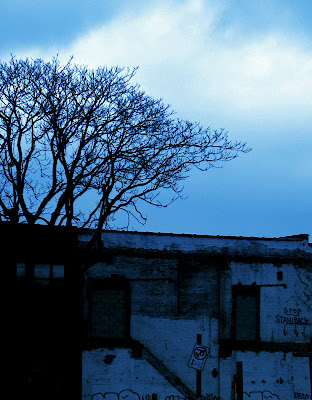
This tree persaveres in a razed lot on Union, between Frost and Richardson, still pulling memories, stories, sensations out of a synaptic sky.
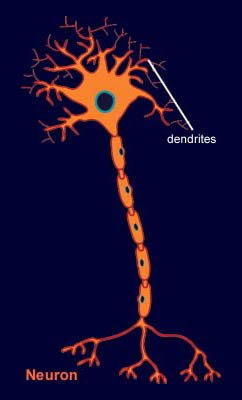
Anyway, in that episode (spoiler alert), it turns out that Farpoint, the space station at which they dock to pick up the Enterprise's crew, is actually a living organism that can shapeshift to provide visitors with their heart's desire (e.g., the ship's physician, Dr. Crusher (she's no Dr. Leonard "I'm a doctor, not an escalator" McCoy), is perusing silk in a shop and says she wishes there were more of a particular kind. She turns away, and when she turns back an entire bolt of the desired fabric has appeared.) Anyway (again), sometimes I'm struck by how much the world we live in mirrors, in fractal-like manner, the organisms we are. Which is pretty great, even if this waystation doesn't always give us what we desire. Or perhaps it does.
This tree persaveres in a razed lot on Union, between Frost and Richardson, still pulling memories, stories, sensations out of a synaptic sky.
Monday, June 16, 2008
Series of Dreams
I was laughing, walking toward Armando, Nickie, and Antoinetta, the old-timer Italians on my street. Today's Bloomsday, the world in a day, and the sky was roiling, as it might over Dublin (Withers being Eccles, here). "I can feel it in my fingertips! The air is charged! It's going to rain," I cried. I amuse them to no end. Then, how great, we watched the rain begin on the Bamonte's side of the street, we staying dry...before it crossed to our side (after looking both ways), and I went in.
I was listening to "A Series of Dreams."
"Dreams where the umbrella is folded
Into the path you are hurled
And the cards are no good that you're holding
Unless they're from another world
In one, numbers were burning
In another, I witnessed a crime
In one, I was running, and in another
All I seemed to be doing was climb
Wasn't looking for any special assistance
Not going to any great extremes
I'd already gone the distance
Just thinking of a series of dreams" - Bob Dylan
I was listening to "A Series of Dreams."
"Dreams where the umbrella is folded
Into the path you are hurled
And the cards are no good that you're holding
Unless they're from another world
In one, numbers were burning
In another, I witnessed a crime
In one, I was running, and in another
All I seemed to be doing was climb
Wasn't looking for any special assistance
Not going to any great extremes
I'd already gone the distance
Just thinking of a series of dreams" - Bob Dylan
Saturday, June 14, 2008
I-95 to I-78 to I-81
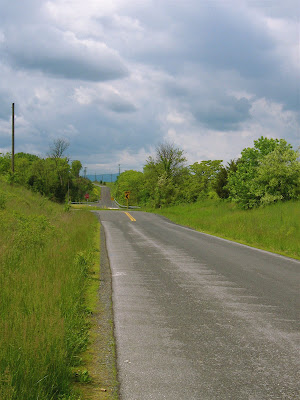
It's not so far from the BQE to Stephens City, Virginia, and it's ridiculous how much of your heart you can leave out there on the great American road.
Gardens
I'm about to step through the summer morning to the Red Shed Community Garden, to collect a bag of Community Supported Agriculture (CSA) vegetables (photo courtesy Miss Heather).
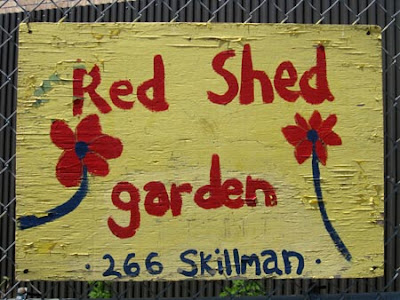
I particpated in this East Williamsburg CSA last year: all you do is pay around $400 upfront, providing the farmers with spring money for seeds and other farm costs. Then, every week from June until November, you go, meet friendly souls, and fill your tote with radishes, garlic scapes, eggplants, melons, celery roots, basil, turnips, tomatoes, and much more, all fragrant with dirt and sunshine, all delicious. The farm in whose earth my vegetables grow (and in whose earth, essentially, I am a shareholder) is Hearty Roots Farm, in Tivoli, New York, 114 miles from Withers Street, on the west bank of the Hudson, just across the river from Catskill Park and the Ashokan Reservoir, which provides New York City with much of its water, and which, close-to-but-far-from the city, holds its own secrets of gentrification, displacement, and controversy.
Yet...the impetus for my posting at this moment was not the farm, this morning, or my momentary departure, but the radio. Studio 360 just offered listeners, like an aural cup of coffee, a story about the artist Fritz Haeg, who turns suburban front lawns into vegetable gardens. His notion of art today - as something that must activate people and inspire thinking not through the overused lenses of shock, sex, and violence but through the gentler windows of thoughtfulness and possibility - resonates with me, and the story of the suburbs and lives he has gently touched - dealing with a real America (50 percent of Americans now live in suburbs) - is wonderful:
I particpated in this East Williamsburg CSA last year: all you do is pay around $400 upfront, providing the farmers with spring money for seeds and other farm costs. Then, every week from June until November, you go, meet friendly souls, and fill your tote with radishes, garlic scapes, eggplants, melons, celery roots, basil, turnips, tomatoes, and much more, all fragrant with dirt and sunshine, all delicious. The farm in whose earth my vegetables grow (and in whose earth, essentially, I am a shareholder) is Hearty Roots Farm, in Tivoli, New York, 114 miles from Withers Street, on the west bank of the Hudson, just across the river from Catskill Park and the Ashokan Reservoir, which provides New York City with much of its water, and which, close-to-but-far-from the city, holds its own secrets of gentrification, displacement, and controversy.
Yet...the impetus for my posting at this moment was not the farm, this morning, or my momentary departure, but the radio. Studio 360 just offered listeners, like an aural cup of coffee, a story about the artist Fritz Haeg, who turns suburban front lawns into vegetable gardens. His notion of art today - as something that must activate people and inspire thinking not through the overused lenses of shock, sex, and violence but through the gentler windows of thoughtfulness and possibility - resonates with me, and the story of the suburbs and lives he has gently touched - dealing with a real America (50 percent of Americans now live in suburbs) - is wonderful:
Wednesday, June 11, 2008
Poem Interlude
Poem for an Empty Lot
The empty lot was cleared overnight,
I'd imagined running by it this summer.
The things I miss most are the things
I never had, like a hug from you any
night I wanted it, non-furtive soup.
Cats stalked and peed in that lot - such
green, the smell of green all summer
long - and one by one they've been
taken in, cleverly whisked off the
streets by strategically placed cans
of food. A few still haunt, casting
longingly at doors. The rest scent
unfurling leaves and feel wild again.
If you were here, I'd take you running
to the place where you can almost
touch Manhattan. I'd ask for something
blessedly ordinary, like Wednesday night.
The empty lot was cleared overnight,
I'd imagined running by it this summer.
The things I miss most are the things
I never had, like a hug from you any
night I wanted it, non-furtive soup.
Cats stalked and peed in that lot - such
green, the smell of green all summer
long - and one by one they've been
taken in, cleverly whisked off the
streets by strategically placed cans
of food. A few still haunt, casting
longingly at doors. The rest scent
unfurling leaves and feel wild again.
If you were here, I'd take you running
to the place where you can almost
touch Manhattan. I'd ask for something
blessedly ordinary, like Wednesday night.
Saturday, May 31, 2008
Settepani Interlude
The girl - maybe 20 - pouring coffee and boxing cakes this afternoon was sweet. I had just finished a 5.3 mile run across the Pulaski Bridge into Queens, along Kent Street (where a buxom woman was having her photograph taken with various sexual paraphernalia, on a backdrop of bricks), to the river, to the little park Under the BQE on Union and Metropolitan...and it had begun to rain. The barista was lamenting the downpour, as she was "going out into the City tonight." I misheard, thought she had mentioned a specific bar or restaurant, and asked her again where she was going. "Out into the City," she repeated with excitement. Growing up in Brooklyn, the City was perhaps as intoxicating a place for her as it once was for me, nearly 1,000 miles away in Rock Island. She wanted the rain to end because she was going to wear "a skirt and boots and everything." It has stopped raining, I'm heading "out into the City" myself shortly, and I hope she is already having a wonderful time.
Friday, May 30, 2008
Withers and Union
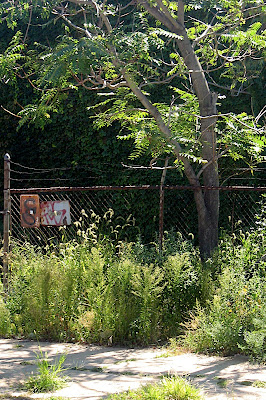
Summer 2007
Summer 2008
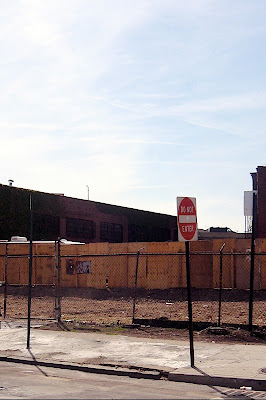
A gaggle of cats once lived in this lot...but have mysteriously vanished. Brian and Corinna think they were taken away when last summer's staple - lushness - was cut and hemmed into this new season's must-have item: emptiness...with lots of sky. But I think their ghosts must still be wandering around, sniffing the air, dreaming of meatballs. Anyway, what anyone with 1988 or 2008 legwarmers knows: what's old will be new - and so it would be 500 years from now, if we all, like the Withers Street cats, suddenly disappeared: "Rising water, tides, and salt corrosion have replaced the engineered shoreline, circling New York's five boroughs with estuaries and small beaches. With no dredging, Central Park's pond's and reservoir have been reincarnated as marshes... Central Park's grass is gone. A maturing forest is in its place, radiating down former streets and invading empty foundations... Long before, the wild predators finished off the last descendants of pet dogs, but a wily population of feral house cats persists, feeding on starlings. With bridges finally down, tunnels flooded, and Manhattan truly an island again, moose and bears swim a widened Harlem River to feast on the berries that the Lenape picked." - Alan Weisman, The World Without Us
Summer 2008
A gaggle of cats once lived in this lot...but have mysteriously vanished. Brian and Corinna think they were taken away when last summer's staple - lushness - was cut and hemmed into this new season's must-have item: emptiness...with lots of sky. But I think their ghosts must still be wandering around, sniffing the air, dreaming of meatballs. Anyway, what anyone with 1988 or 2008 legwarmers knows: what's old will be new - and so it would be 500 years from now, if we all, like the Withers Street cats, suddenly disappeared: "Rising water, tides, and salt corrosion have replaced the engineered shoreline, circling New York's five boroughs with estuaries and small beaches. With no dredging, Central Park's pond's and reservoir have been reincarnated as marshes... Central Park's grass is gone. A maturing forest is in its place, radiating down former streets and invading empty foundations... Long before, the wild predators finished off the last descendants of pet dogs, but a wily population of feral house cats persists, feeding on starlings. With bridges finally down, tunnels flooded, and Manhattan truly an island again, moose and bears swim a widened Harlem River to feast on the berries that the Lenape picked." - Alan Weisman, The World Without Us
Saturday, May 24, 2008
Brooklyn-Queens, Non-Express
Jared and I headed along the BQE today then crossed over the Pulaski Bridge into Queens, riding its shoulders past Laguardia and to Flushing Meadows. Home to many geese and at least one turtle, the park reminded me of La Carolina in Quito, maybe because of the shape of the clouds...or because of the ratio of soccered dirt and grass to trees and lakes. Incidentally, the lakes are not lakes but pieces of the Flushing River. Like so many inconvenient things - hills, baseball fields, black people - the river fell victim to Robert Moses in the 1930s, though before that it had already been bitten into by Gatsby's "Valley of Ashes," a landfill operated by the Brooklyn Ash Removal Company. Now the river runs beneath the soccer fields and the Long Island Expressway, which makes ten times the ocean sounds of the little old BQE. New York's vascular system is a marvel to equal the destruction that made it possible.
Before we rode into the park, we stopped off at Willet's Point. If the the gods of grease and mechanics created a paradise, this clanking barrio would be it. With roads scarcely navigable by 4x4s, potholes that formed little lakes, and shoulder-to-shoulder autobody repair shops uniformly selling, from bright facades, engine parts ("enjin" in some cases), glass, tires, and other vehicular bric-a-brac, this frontierland was mesmerizing, like a piece of urban Mexico slapped down in northern Queens. Everyone got a kick out of us picking our way over the corrugated concrete roadway: Jared's mountain bike stood him in considerably better stead than my skinny ten-speed. Then it was off to the park, followed by a roll through leafy Forest Hills, Middle Village, and industrial Maspeth, with a stop-off at a Polish bakery on 61st Street and Grand Avenue for a bit of sugar. Three hours and the city made endless again, and a little more known.
Before we rode into the park, we stopped off at Willet's Point. If the the gods of grease and mechanics created a paradise, this clanking barrio would be it. With roads scarcely navigable by 4x4s, potholes that formed little lakes, and shoulder-to-shoulder autobody repair shops uniformly selling, from bright facades, engine parts ("enjin" in some cases), glass, tires, and other vehicular bric-a-brac, this frontierland was mesmerizing, like a piece of urban Mexico slapped down in northern Queens. Everyone got a kick out of us picking our way over the corrugated concrete roadway: Jared's mountain bike stood him in considerably better stead than my skinny ten-speed. Then it was off to the park, followed by a roll through leafy Forest Hills, Middle Village, and industrial Maspeth, with a stop-off at a Polish bakery on 61st Street and Grand Avenue for a bit of sugar. Three hours and the city made endless again, and a little more known.
Saturday, May 10, 2008
Nine Reasons to Love Withers Street
9. If you can't get to the beach, you can listen to cars on the BQE and pretend it's the ocean.
8. If you can't get to the beach, you can watch cars on the BQE and pretend you're in them, going to the ocean.
7. If you hate the beach, you're safely surrounded by concrete, scaffolding, and pigeons.
6. The Hotel Le Jolie and its Grand Theft Auto IV banner. Viva le irony, and feel good about your rent: if you were living in the hotel, you'd be paying well over $8,000/month...for a nearly windowless room under the BQE.
5. Maria, Antoinetta, Armando, and the other aged people from the old country who sit on stoops, hang out laundry, grow tomatoes on concrete lots, and do not wear sneakers and skinny pants.
4. The Dance of the Giglio (one of just two sites in the city (the other being in East Harlem) where this happens, outside Italy). "Imagine a 12-piece brass band and 125 men carrying a five-ton, five-story, hand-sculpted tower on their shoulders, dancing it through their neighborhood in tempo to joyous Italian folk songs." The tower stands for much of July, surrounded by food stalls, a carousel, and other rides...particularly excellent for parishioners at Our Lady of Mt. Carmel, who can celebrate the betrayal and violent death of Christ and then enjoy a funnel cake.
3. 37.
2. Bamonte's, one of the oldest remaining restaurants in the city (it opened in 1900), patron saint of many stray cats, and the closest thing to the Soprano's on a Saturday night this side of the Hudson.
1. The chance to quiz friends on little-known parts of farm animals.
8. If you can't get to the beach, you can watch cars on the BQE and pretend you're in them, going to the ocean.
7. If you hate the beach, you're safely surrounded by concrete, scaffolding, and pigeons.
6. The Hotel Le Jolie and its Grand Theft Auto IV banner. Viva le irony, and feel good about your rent: if you were living in the hotel, you'd be paying well over $8,000/month...for a nearly windowless room under the BQE.
5. Maria, Antoinetta, Armando, and the other aged people from the old country who sit on stoops, hang out laundry, grow tomatoes on concrete lots, and do not wear sneakers and skinny pants.
4. The Dance of the Giglio (one of just two sites in the city (the other being in East Harlem) where this happens, outside Italy). "Imagine a 12-piece brass band and 125 men carrying a five-ton, five-story, hand-sculpted tower on their shoulders, dancing it through their neighborhood in tempo to joyous Italian folk songs." The tower stands for much of July, surrounded by food stalls, a carousel, and other rides...particularly excellent for parishioners at Our Lady of Mt. Carmel, who can celebrate the betrayal and violent death of Christ and then enjoy a funnel cake.
3. 37.
2. Bamonte's, one of the oldest remaining restaurants in the city (it opened in 1900), patron saint of many stray cats, and the closest thing to the Soprano's on a Saturday night this side of the Hudson.
1. The chance to quiz friends on little-known parts of farm animals.
Subscribe to:
Posts (Atom)


